By: David Kilpatrick, PhD
I fell in love with Santos long ago. It’s been almost half a century since my teammates and I were shown the film, Pelé: The Master and His Method on a screen setup on the floor of our school gym at Christ the King Lutheran in Memphis. For this Pelé lunchbox-carrying student of the game,[i] the skills in the film helped set my technical foundation as a player, coach, and coach educator. And it also sparked my curiosity, making me a budding futebol romantic, as I was entranced by the film’s monochrome setting at Vila Belmiro, the home of Santos Futebol Clube.
The prospect of speaking on VAR as a threat to the aesthetic impact and cultural significance of the beautiful game, at the International Association for the Philosophy of Sport annual conference on the campus of the University of São Paulo the first week of September, meant my dream of visiting nearby Santos might finally come true.
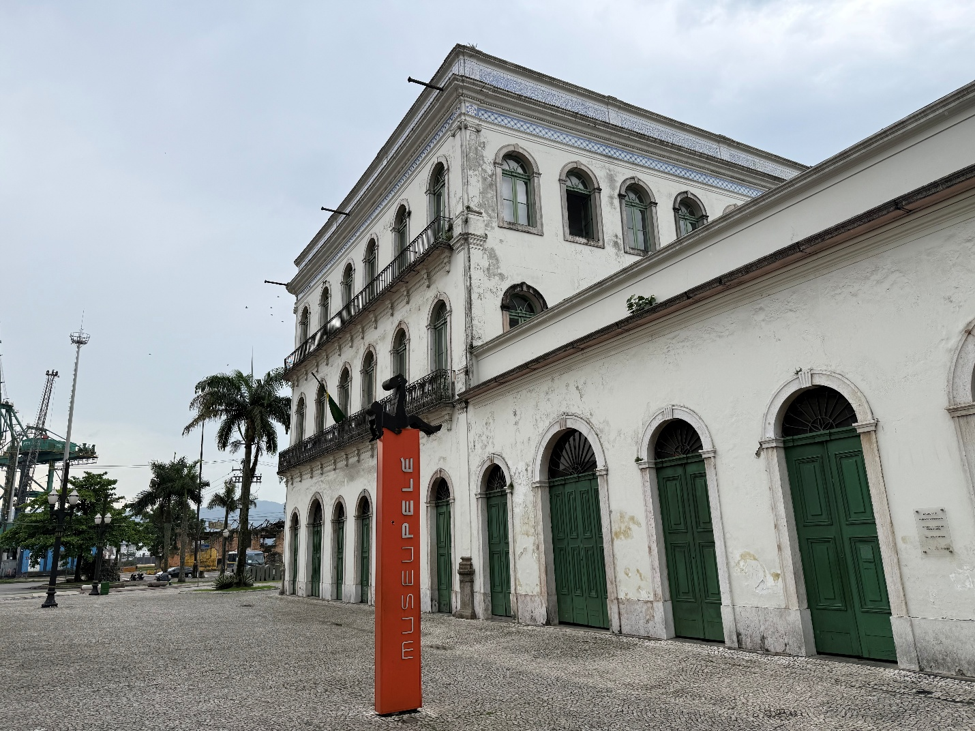
My wife, Lisa, and I were driven from São Paulo to Santos by football memorabilia collector, Marcos Batista, and sport historian Odir Cunha. As we parked across the street from the Museu Pelé[ii] on Monday, August 31st, I was struck to be mere yards from the docks where Charles Miller arrived with the first modern footballs and a copy of the Laws of the Game to reach Brazil in 1894.
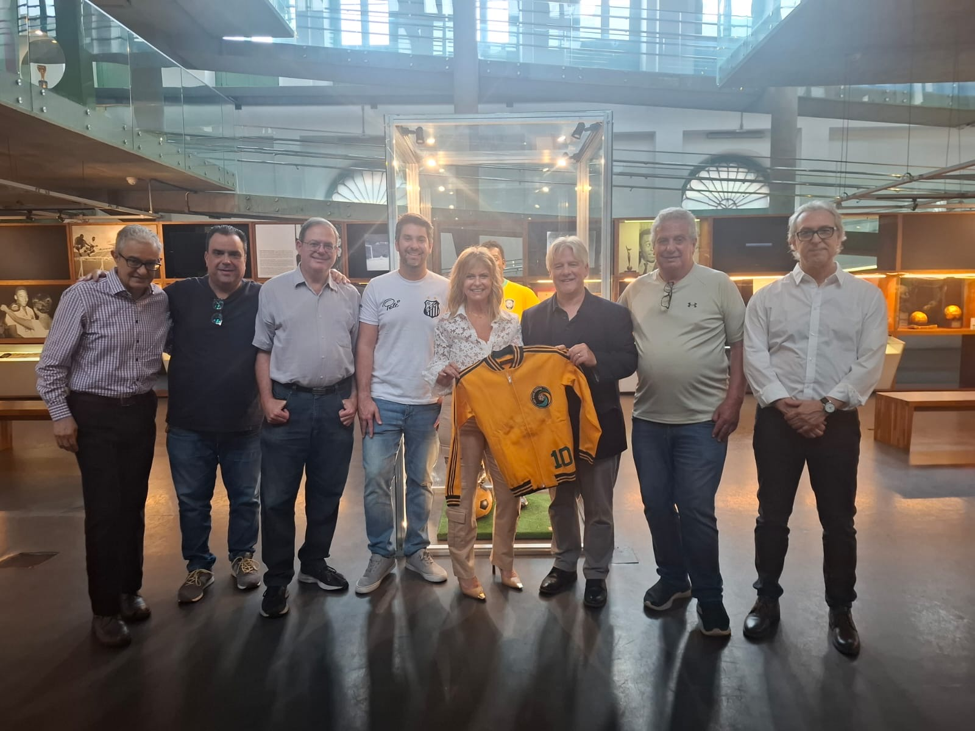
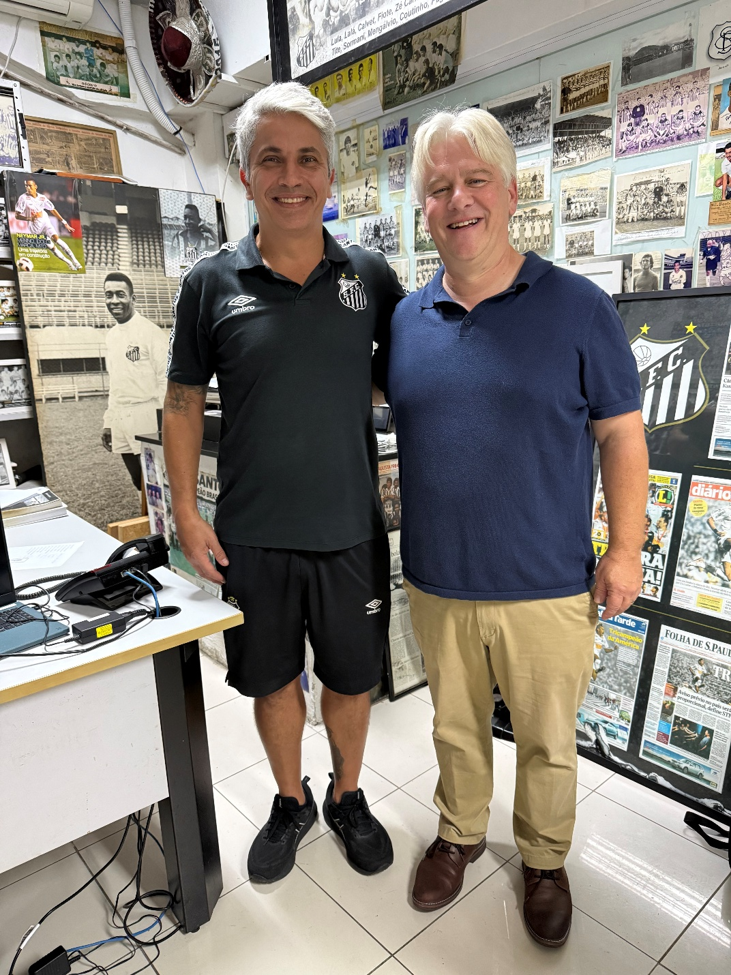
Located in the heart of the historic port district of Santos, the spacious 4,000 square-foot Museu Pelé was established twelve-years ago at the Valongo Mansions – a national landmark complex comprised of two three-story buildings built in 1867 and 1872, linked with a ground-level lobby with a gift shop and café. Although closed to the public on Mondays, we were delighted to be greeted by a sizeable delegation of museum staff, journalists, and local politicians.[iii] Among the museum staff who welcomed us on their day off were Project Coordinator Cláudia Toledo, Director Paulo Monteiro, and the architect responsible for the conception and implementation of the entire Valongo Mansions renovation project, Dr. Ney Caldatto Barbosa.
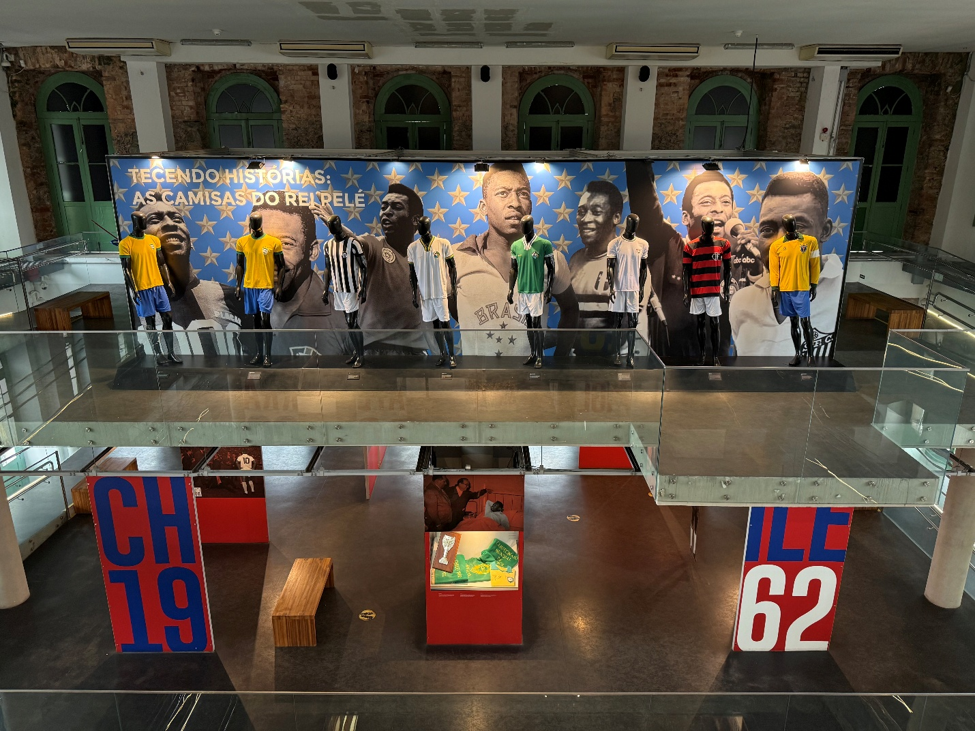
After a brief interview for local media in the main lobby, we were introduced to Antônio and Thiago Bulgarelli of Athleta, carrying jerseys and a warmup jacket worn by Pelé with the Cosmos. We discussed Athleta’s rich legacy, providing the Brazilian national team jerseys for the 1958, 1962, and 1970 World Cup winners, as well as the jerseys worn for the Cosmos v Santos farewell match for Pelé in 1977 and the World All-Stars friendly at Giants Stadium in 1978. At long last, I learned the three gold stars on those Cosmos jerseys represented the Athleta brand and their connection with the Seleção’s world championships. An enduring mystery solved.
Also greeting us was the Secretary of Tourism, Commerce and Entrepreneurship for the City of Santos, Thiago Papa. We were thrilled to be invited back to Santos to see the Copa do Brasil derby match against Palmeiras in two nights. As we planned our trip to Brazil, we kept an eye on the Santos FC schedule but thought we would have to settle for the away match at Corinthians the day before, a thrilling 0-1 Santos win in the Clássico Alvinegro at the ultra-modern Neo Química Arena in São Paulo. We did not expect the possibility of witnessing a Clássico da Saudade, much less at Vila Belmiro, so we were thrilled to accept his invitation to return to Santos in two days for the match.
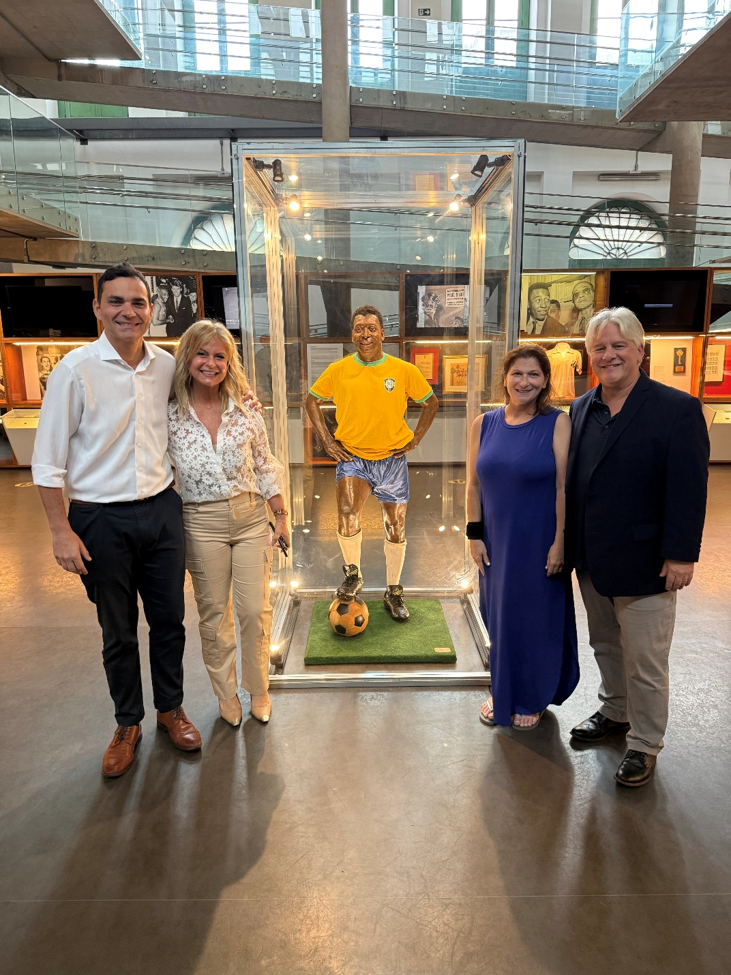
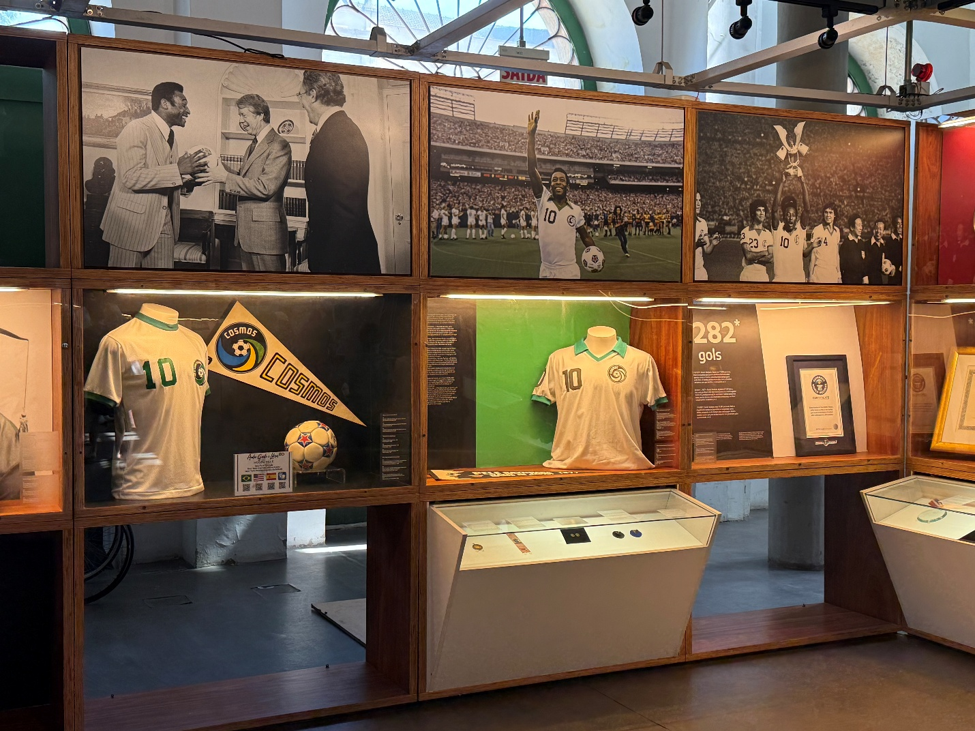
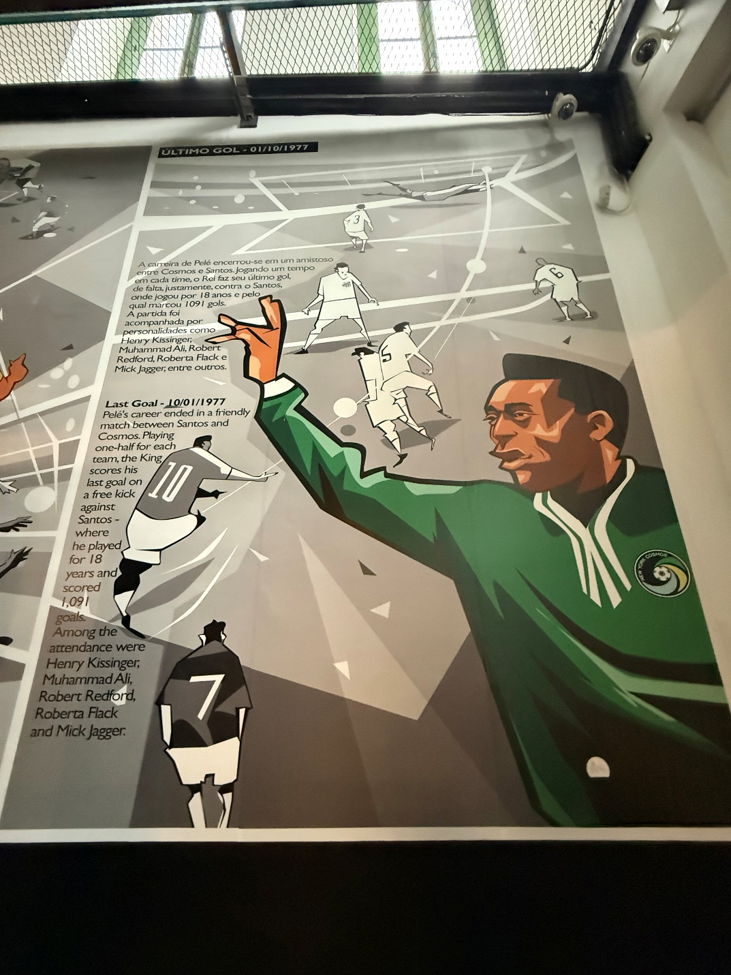
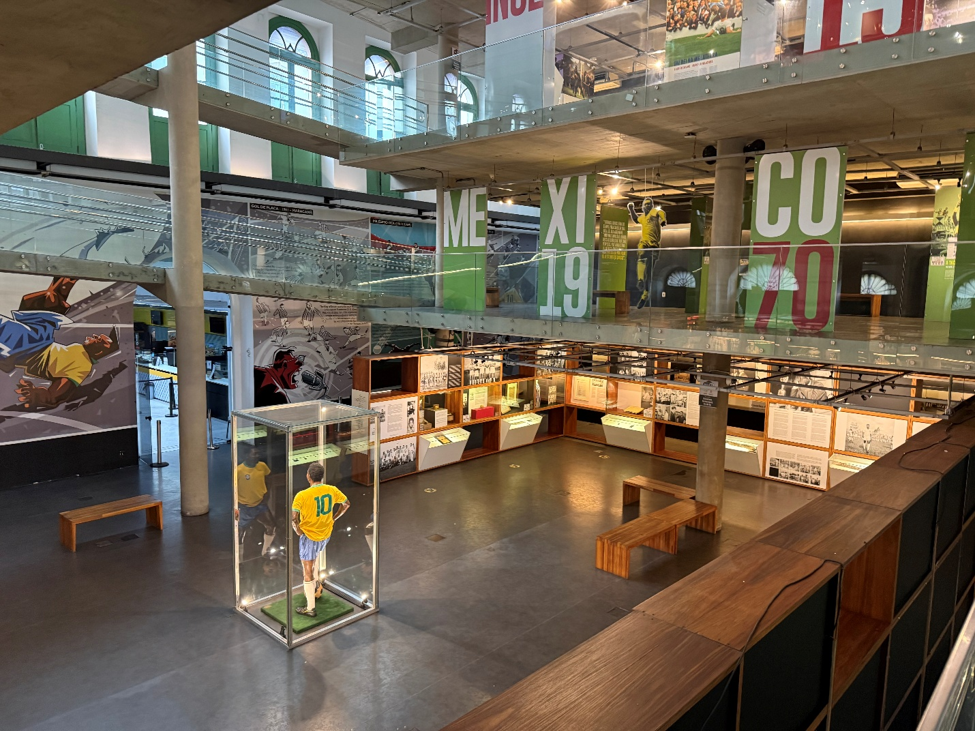
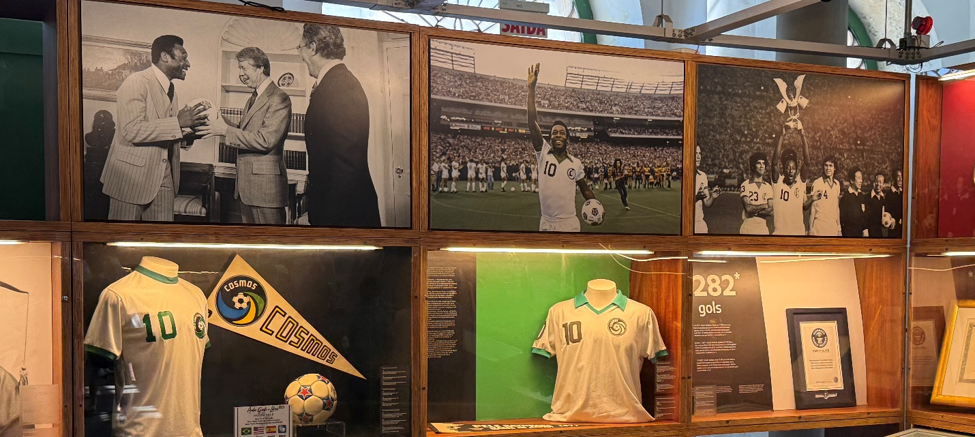
The congregation strolled into the southern bank of the complex, to the right from central entrance, and we were struck by the sight of a life-size statue of Pelé in his national team uniform, encased in glass. At the periphery to my right, my eye was drawn to Cosmos items in the corner. So after we posed for photographs in front of the statue, I locked in on the display of items from the King’s time with the Cosmos, including two jerseys, pennants, a star-spangled NASL ball, and a ceremonial coin from the Cosmos-Santos farewell match. The significance of October 1, 1977 at the Meadowlands for the story of the King was a prominent feature of the exhibit, especially with a giant mural in another corner of the first floor that depicted his last goal, scored in the first half for the Cosmos before he rejoined Santos after intermission.
We then took an elevator to the third floor and descended the extensive collection taken mostly from the more than 2,400 items Pelé accrued through his career. His World Cup winner medals, trophies and crowns were among the items that tell the tale of the unrivaled greatest footballer of all time. It was mesmerizing as the collection was so rich that one could easily spend hours, even days taking it all in.
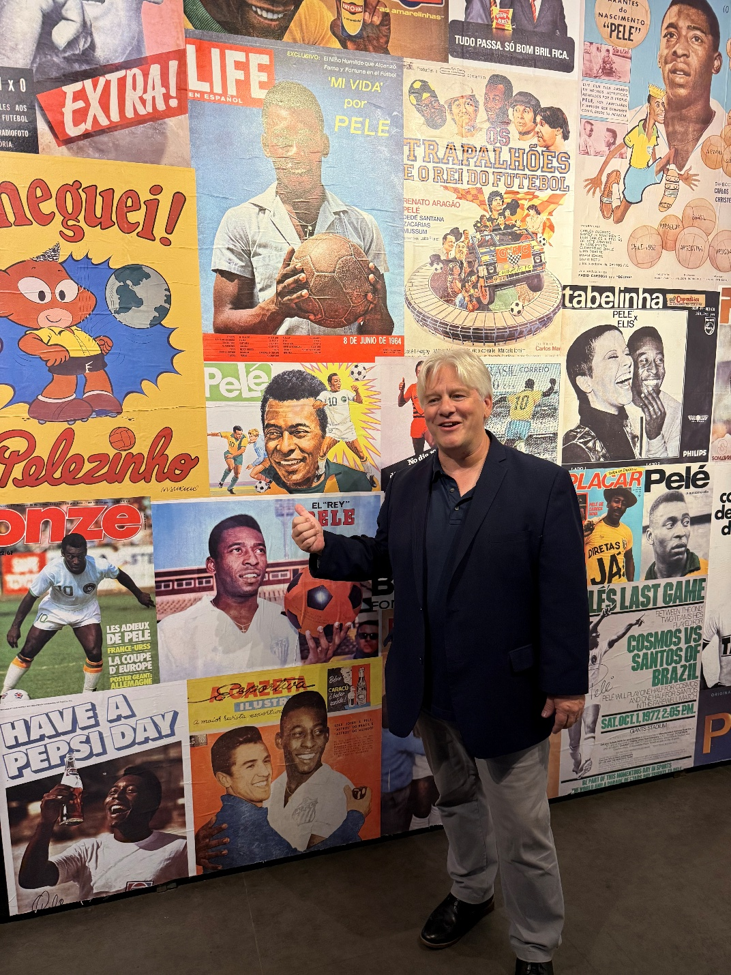
Crossing over to the north wing of the complex, it was hard to believe there was so much more to see. In addition to a theatre, other exhibits featured the impact Pelé made as a pop culture icon, as well as art inspired to him, including the nearly ubiquitous Luis Bueno paste-up or lambe-lambe of “Pelé Beijoqueiro” or “Pelé the Kisser,” which we had seen all over Santos and São Paulo, taken from the farewell at the Meadowlands but replacing Muhammed Ali with figures ranging from the Mona Lisa to Salvador Dalí to anyone willing to pose beside a life-size cutout of the photo. It was clear this memorable moment between the two greatest athletes of the twentieth-century at Giants Stadium was an iconic image that not only defined the legend but served as a symbol of Brazil and its legacy of futebol-arte.
Having waited twelve-years to see the Museu Pelé since it opened, our visit did not disappoint. The space and its displays tell the King’s tale powerfully, giving new life to the historic Valongo district while preserving and sharing Pelé’s personal collection with the world, inviting lovers of the beautiful game to celebrate his legacy in the port city where he rose to fame.
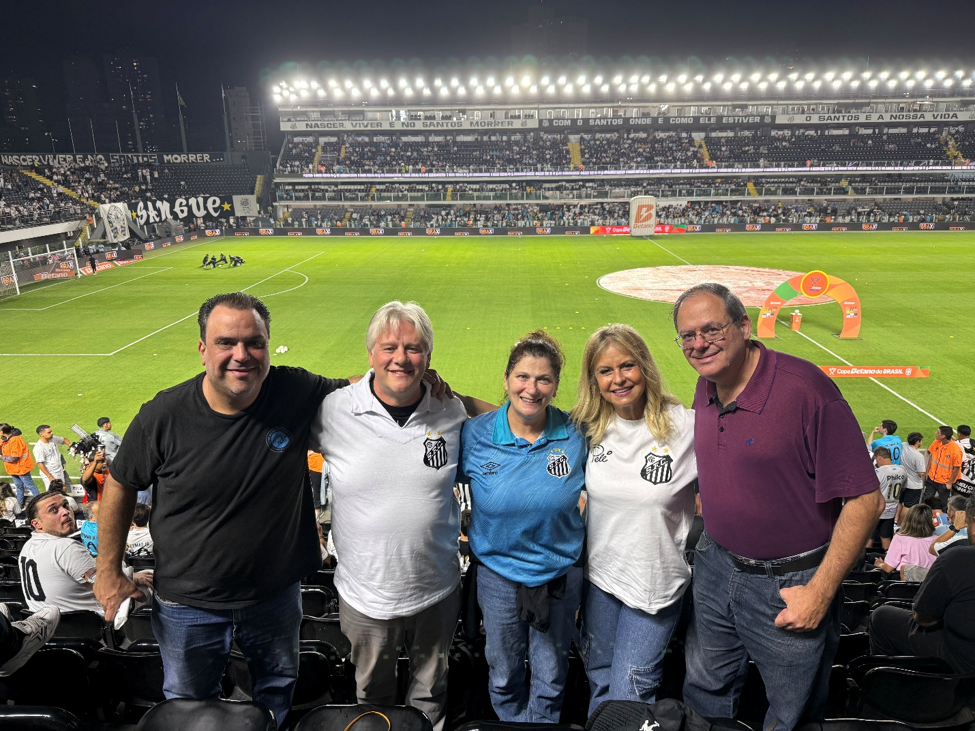
Two days later, Lisa and I returned to Santos for the 9:00pm kickoff against Palmeiras. A carnivalesque atmosphere enveloped the Estádio Urbano Caldeira in the Vila Belmiro neighborhood. When we met up with Marcos Batista, Paulo Monteiro, and Cláudia Toledo outside the stadium, although we had only met two days prior, it felt like greeting the dearest of lifelong friends.
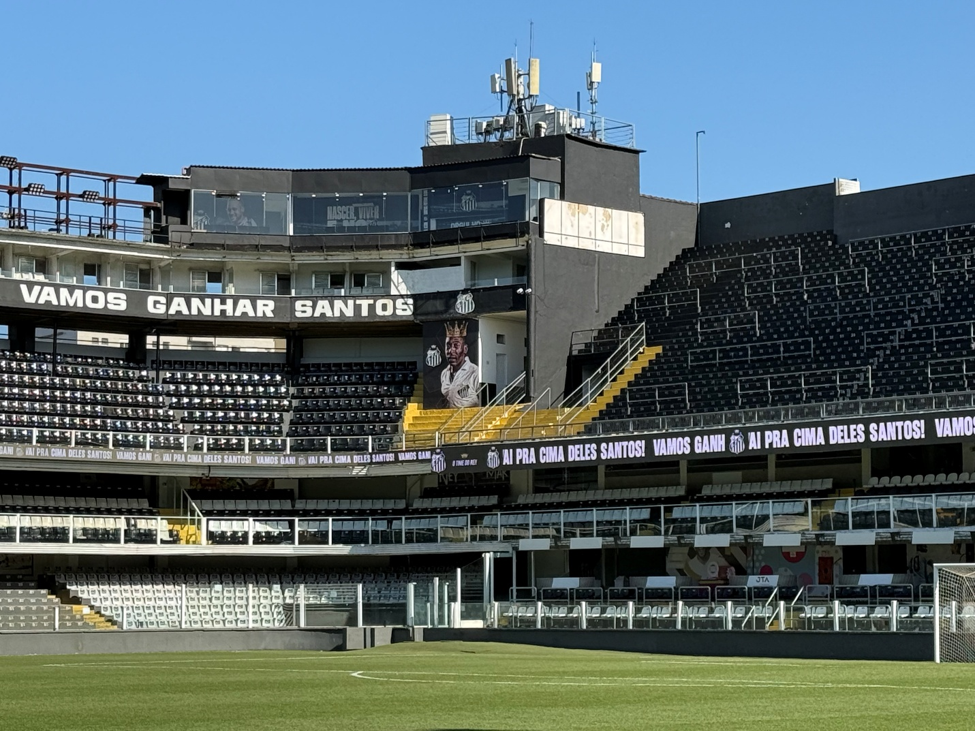
Inside the stadium, at long last I beheld the pitch where Pelé: The Master and His Method was filmed. Although the near-capacity crowd of 15,077 in attendance was considerably smaller than the 47,496 at Corinthians three-days prior, the atmosphere was no less intense. Indeed, authenticity and tradition creates an aura that pervades the Vila Belmiro. The famous “Manto Sagrado” or “Sacred Mantle,” the jersey worn by Santos, enhances that sense of a ferociously religious environment.
Three nights before, Neymar Junior had put on an inspired display at Corinthians that reminded the futebol world he was the heir to Pelé, upholding his aesthetic ideal. But the visitors were determined to counter futebol-arte with futebol-força, a vicious foul to Neymar just six-seconds into the match sending their message of intent. We did not witness any VAR interventions in the two Santos matches we attended, but we did notice the new CFB PRO badges worn by Brazilian referees with a familiar wordmark. We were surprised to learn that Sandro Ricci, who recently served as the Manager of Senior Match Officials for the PRO in North America, had taken command of Brazil’s new PRO in June.[iv] Regardless of any potential North American influence on Brazilian football, it was clear special protection was not afforded the football-artist in the home of jogo bonito. When Neymar left the pitch in tears at halftime, it was clear brutality had effectively negated his creativity. He would not return for the second half, and the match ended 0-0, an aggregate 0-3 win for Palmeiras. But that did not diminish the spirits of the Santos faithful, who partied on in the streets of Vila Belmiro from Wednesday night into Thursday morning, when the city would learn shortly after sunrise their Prince would need four-to-six weeks to recover from a thigh injury sustained in the match. Despite the lack of goals, we witnessed the meaning of Santos for its supporters and, sharing their passion, we became Santistas.
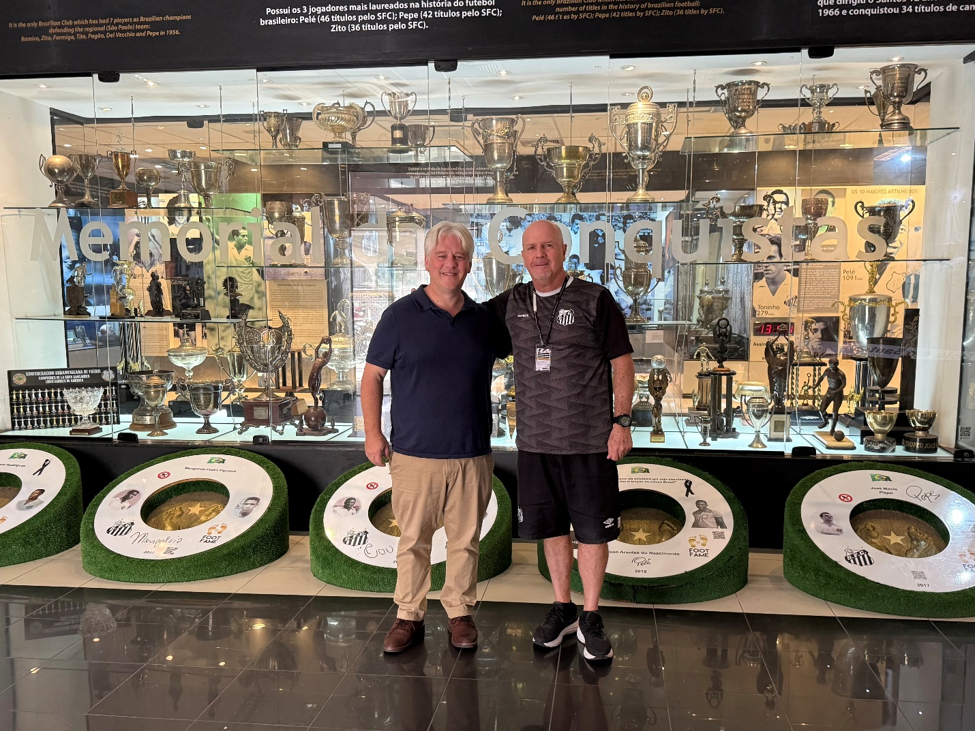
We watched the sunrise on the beach in the Gonzaga neighborhood and returned to Vila Belmiro Thursday afternoon. We were greeted at the Memorial das Conquistas, the museum at the stadium, by curator Rogério Zilli. It was Rogério who had catalogued the personal collection of more than 2,400 items for Pelé, after which he was hired by Santos FC.
Having won forty-two Brazilian titles with Pelé, of course the King features prominently in the club’s museum, with two life-size statues, a head bust, and two sets of foot casts are among the numerous items on display that celebrate his legacy. Rildo and, of course, Carlos Alberto are other Cosmos who appear among the many photos from the era of Os Santásticos or O Balé Branco (“the White Ballet”) – the Santastic side who won two Copa Libertadores, two Intercontinental Cups, one Intercontinental Champions’ Supercup, and six Campeonato Brasileiro Série A titles during Pelé’s tenure at the club from 1956-74. The trophies that commemorate these titles and so many more from that dynasty that made the club a worldwide symbol of jogo bonito fill the museum.
Tributes to the Prince of the Vila also feature. A dynamic postmodern life-size tin statue, sculpted by Laércio Alves in 2012, and the most recent addition to the museum (installed just weeks ago), a classical bronze bust sculpted by Renato Guedes, celebrate the three Campeonato Paulista titles (2010–2012), and the 2010 Copa do Brasil and 2011 Copa Libertadores that Neymar Jr. won during his first spell with the Peixe or Fish, as the Santistas like to call their club. His return has rejuvenated the fanbase, and hope abounds the club will return to global prominence.
It is a sentiment we share from a Cosmos perspective. And everywhere we go, anyone we speak with in Brazil – but especially in Santos – expresses their love for our club’s role in world football history. Our clubs are intimately linked with shared DNA. Pelé, Carlos Alberto, Rildo, Nelsi Morais. And of course, Professor Júlio Mazzei. This deep connection with shared heritage is reinforced when we enter the Centro de Memória, at the back of the museum, where we meet my counterpart, Club Historian, Gabriel Pierin. A fraternal sense of shared interests made the space feel familiar, the club itself – so friendly and gracious, it felt like we were meeting our extended family.
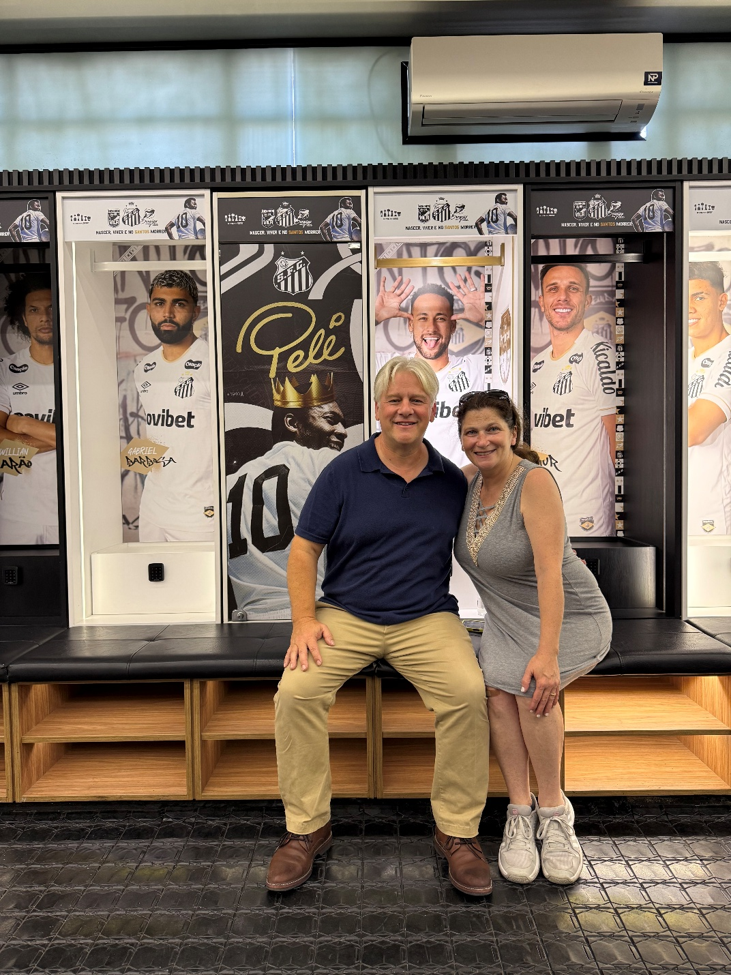
From the museum we were escorted to the locker room. Pelé’s space remains reserved there, with proximity to his locker serving as a mark of prominence in the squad. Gabriel Barbosa’s is to its immediate left and Neymar Jr.’s to its immediate right. Arthur, signed that morning, was given the locker immediately beside that of the Prince, twice removed from that of the King. Pelé’s locker, we were told, contains a mystery. As he left the Vila Belmiro pitch for the last time as a Santos player on October 2, 1974, he placed something special in a sealed box and left it there, never to be opened. Even on his deathbed, he would not reveal what the box contains. It brings the club eternal blessing, like a lightning rod. And the players who wear the Sacred Mantle share that sense of obligation to the club and its legacy.
We walked away from the stadium inspired by the club and its mission, proud of our club’s connections with such a powerful symbol of beauty, and grateful for familial hospitality.
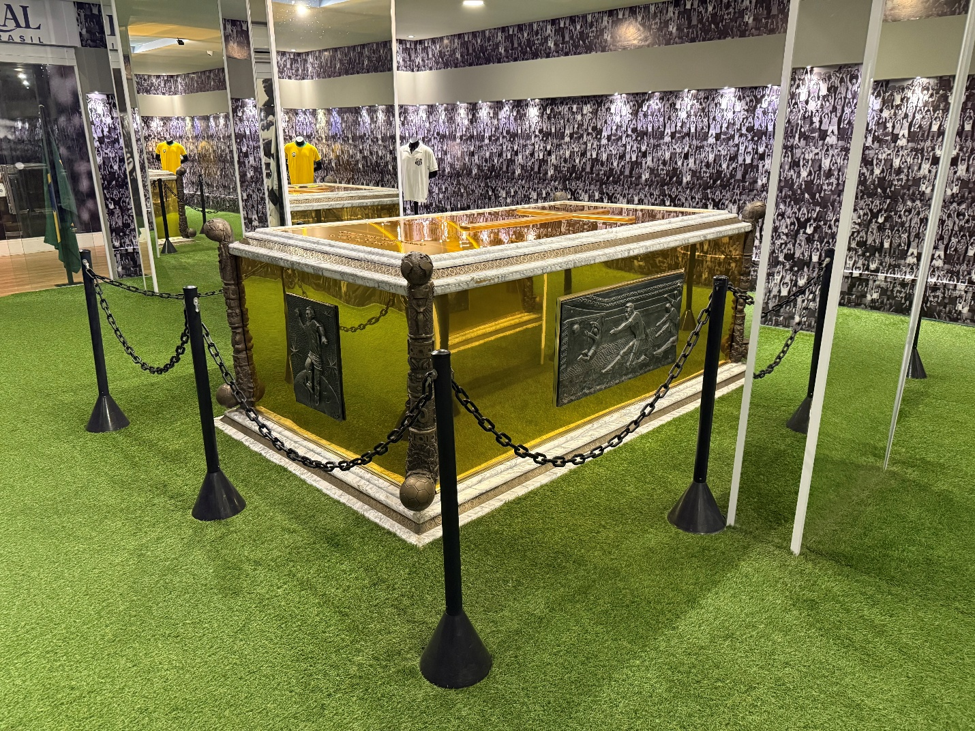
Pelé’s tomb at the Memorial Necrópole Ecumênica is nearby. The sense of the sacred reached its peak as we approached – the emotional climax and pinnacle of our pilgrimage. In the precious moments spent in his presence, I was always struck not only by his generosity and kindness, but most of all by his sense of understanding what he meant to the world – his role as a living symbol, the impositions on his privacy and the lingering pain from a playing career through which he suffered unceasing brutality made of him a sacrifice for the beautiful game. He never failed in that mission or shied away from that sense of purpose. So it was a blessing to enter the chamber and find his final resting place to be a place of tranquility and majesty, fit for a great king beloved by those well beyond his native land.
We left the mausoleum overcome with emotion, then went back to the beach to play futebol at sunset before enjoying the most delicious seafood meal of our lives.
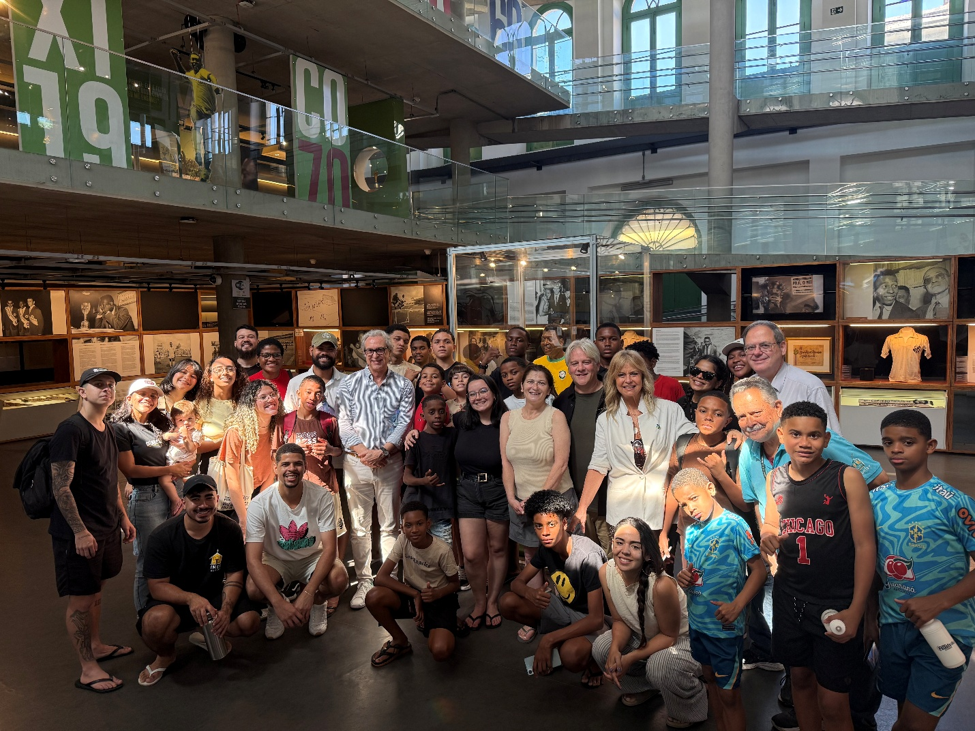
The next morning, before heading back to São Paulo, we returned to the Museu Pelé to join our friends there for coffee and pastel de nata. We were joined by another collector, Hugo Reston, who shared several rare items he had acquired, including three of Pelé’s Cosmos jerseys made by Athleta, one green and two white, one signed by Pelé as a gift to Johan Cruyff. We also met a large group of students who had just arrived from Rio de Janeiro, a pilot program to create a soccer school for children in impoverished neighborhoods. We posed with the students and their teachers in front of the life-size Pelé statue, along with Dr. Ney Caldatto Barbosa, Cláudia Toledo, and Paulo Monteiro, then enjoyed watching the kids learn about the King from the incredible exhibition. It was especially rewarding seeing them gaze at the Cosmos items on display, further deepening our appreciation for the role our club will always play in the rich story told by the museum dedicated to the world’s most legendary athlete. Pelé’s gifts keep giving.
Britain can claim to be the Home of Football. Our friends in London, Sheffield, Lancashire, and Glasgow squabble over which deserves to be known as the birthplace. But there can be no question that Brazil is the Home of the Beautiful Game. And Santos is its birthplace. For those in Cosmos Country, Santos should be seen as our sister city. For lovers of the beautiful game, a pilgrimage to Santos is an obligation, a sacred duty.
Muito obrigado, Santos. We shall return.
[i] https://pghrev.com/my-pele-lunchbox/
[ii] www.turismosantos.com.br/museupele
[iii] https://www.boqnews.com/esportes/museu-pele-em-santos-recebe-historiador-do-new-york-cosmos/
[iv] https://proreferees.com/2026/06/09/sandro-ricci-departs-pro-to-take-new-role-with-cbf/